Magical Kartchner Caverns

Imagine stumbling onto a site so incredible, so beautiful, so old, yet so alive that you are torn whether to keep this place secret to protect it or to reveal it to the world so that the beauty and scientific wonder of it can be enjoyed by generations to come.

kartchner caverns

This is the secret that cavers Gary Tenen and Randy Tufts discovered in 1974 and held secret for 14 years. After their amazing discovery, they knew this was a place like no other and knew it was a place that needed to be preserved. The two men had just discovered a cave on par with the finest caves in the world. And unlike some other popular caves, this one was still alive. By comparison, the world-famous Carlsbad Caverns is mostly dry. Another famous cave, Colossal Cave, is dry and dusty. But the wet, dripping quality of this newly discovered cave meant that the 40,000 – to nearly 200,000-year-old flowstone, stalactites, and stalagmites were still growing. After gaining the cooperation of the Kartchner family and working with them for ten years, together they decided that the best way to achieve the goal of protection through development as a tour cave was to approach Arizona State Parks.

More on the discovery of the caverns

The discovery of the cave was finally made public in 1988 when the landowners sold the area to the state for development as a park to showcase the caverns. Prior to its grand opening in 1999, yes, over 10 year later, the state spent $28 million on a high-tech system of air-lock doors, misting machines and other equipment designed to preserve the cave.

I can’t even begin to describe the beauty that these underground caverns hold. Pulling into Kartchner Caverns State Park you have no idea what is in store for you. The vast, high desert terrain is holding its secrets close and only thanks to those two crazy cavers will those secrets be revealed to you.

IMG_0755

IMG_0753

Our tour of the Rotunda/Throne Rooms was led by a knowledge and amusing young park guide, Suzanne. She used humor to help our small group of 20 people understand why we could not touch anything as we could effect this living cave and damage it irrevocably. And trust, me you wanted to touch it.

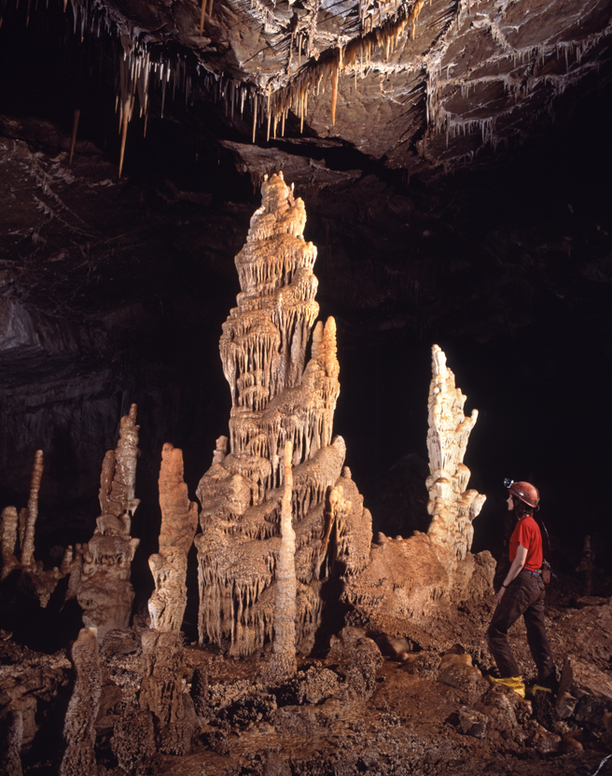
The tour was a half of a mile in length and took approximately an hour and a half to complete, 50 minutes of which is underground. The moist, damp humidity inside the caverns was a welcome change form the dry desert. We learned the role that water plays in creating the caverns, saw the discoverers’ original trail, delicate formations and “Kubla Khan,” the largest column formation in Arizona, over five stories tall.
IMG_0748

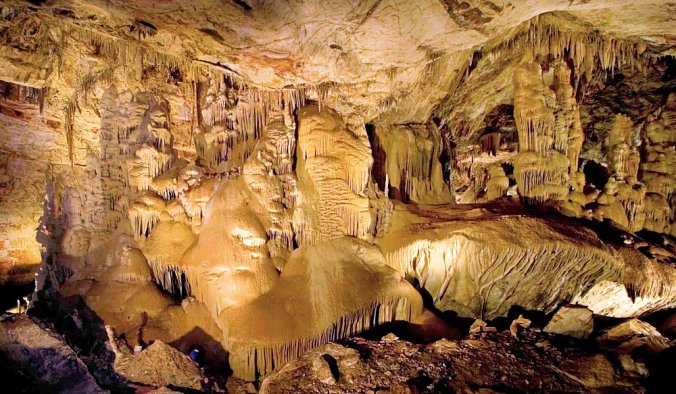
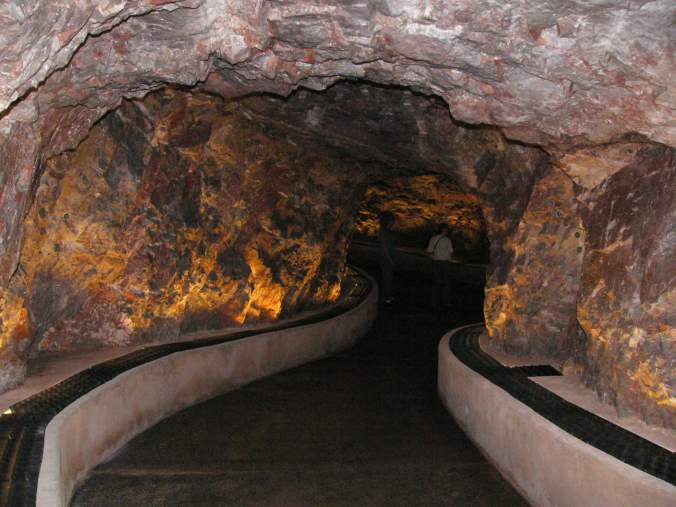
The caverns have stringent technical controls: heavy steel doors keep out hot desert air, a misting system maintains a relative humidity of at least 97.5 percent and low-intensity lights inhibit algae growth. Once inside, the two main galleries are a kaleidoscope of color with 100-foot high ceilings dripping with multihued stalactites and floors jutting up with matching stalagmites. Giant white columns form where the two meet. Dainty white helictites, translucent orange bacon, and shields of white calcite adorn this natural wonder. An extraordinarily thin stalactite, called a soda straw, hangs tenuously 21 feet 2 inches down from the cave’s ceiling. Rare quartz needles form “birds nests” and nitrocalcite “cotton,” and an extensive array of microscopic brushite moonmilk are found here and in only a few other caves in the world.
IMG_0751

Years of research and plain hard manual labor made these Caverns accessible to the public. I will admit to be completely blown away, mesmerized and left in awe of what I saw on our short time underground. I could have stayed there all day and left wishing I had had a chance to meet Gary and Randy. So many questions were racing through my mind.
IMG_0749

No cameras are allowed inside the caverns, so I can’t take any credit for the photographs in this blog post. Thanks to the internet, I found some images that would perhaps convey a small fragment of what we saw in our short time underground. Pictures can not do this underground wonder justice, they can’t convery the beauty nor the depth and size of the formations. All I can say is that you really must put Kartchner Caverns on your bucket list.

Thank You Boyce Thompson

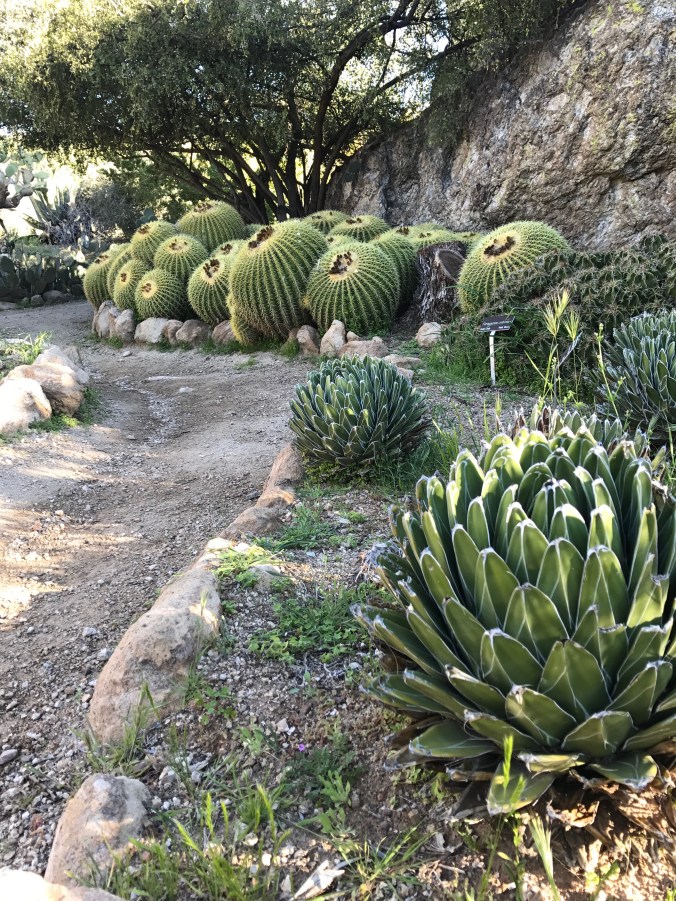
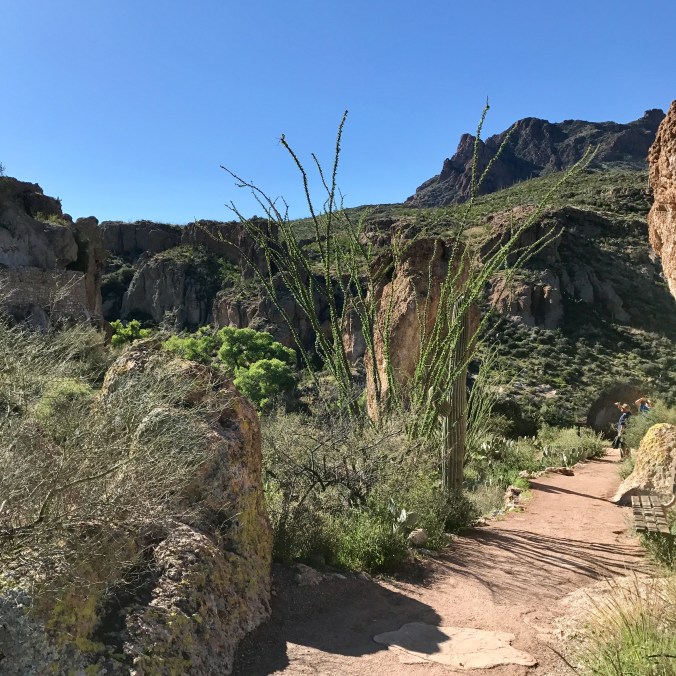
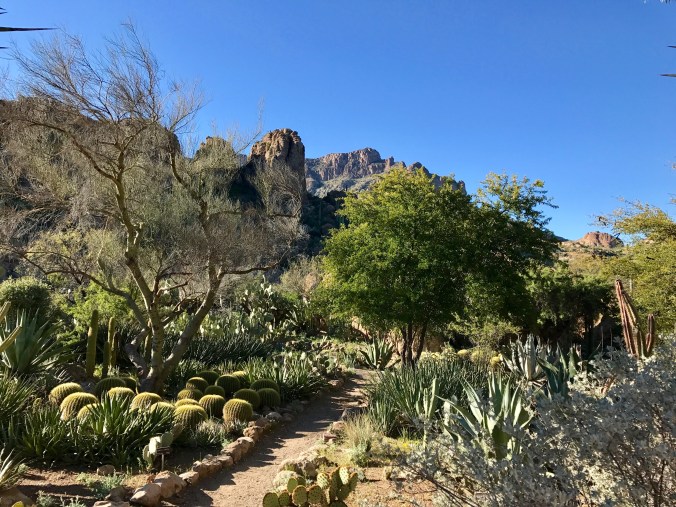
We got up early to beat the heat – expected high of 87 degrees – and took a leisurely hike through the Boyce Thompson Arboretum State Park which is located in beautiful Queen Creek Canyon, three miles west of Superior AZ. For nature lovers this is a must see and a easy day trip from the Phoenix metro area. Over 2600 species of arid land plants from around the world grow at the Arboretum. Agaves, aloes, boojum trees, cork oaks, jujube trees, legume trees, and, in the Eucalyptus grove, one of the largest red gum Eucalyptus trees (“Mr. Big”) in the United States. Cacti and succulents grow extensively throughout the Arboretum.

75E34FCC-D74D-41C0-82BD-989C3C71AF6B.JPG

F78BB8BC-E186-4C7D-B9FB-752FD750EC39

Natural resource developer and philanthropist William Boyce Thompson established the Southwestern Arboretum in the mid-1920’s. The inspiration to create an arid-region arboretum sprang from a lifetime of interest in all things botanical, horticultural, and natural. It was specifically inspired by Thompson’s visit to Russia during the terrible famine years just after the First World War. Thompson, who was a Colonel in the Red Cross, came to realize how profoundly dependent human beings are on plants. It was Thompson’s fervent desire to do something to enhance man’s symbiotic relationship with members of the plant kingdom. A man of broad vision typical of the expansive “can-do” times, Thompson along with the Arboretum’s first Director, Franklin Crider, fashioned a mission for the Arboretum that was vast and global in scope with economic utility and aesthetic appeal being of primary importance in aquiring material for the collection.

64AA51E7-0D44-4265-AEF3-7F733E882A0EC3D8514D-0D45-40DF-81D4-1BC4BE6A81DB

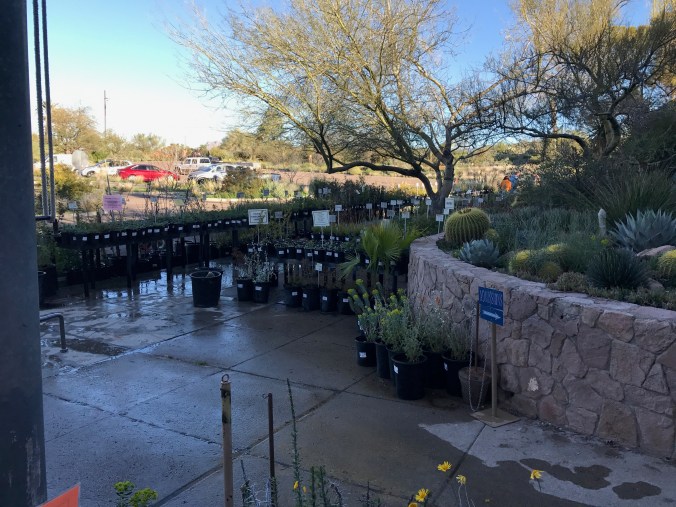
Having spent the last 10 years of my working career at a non-profit organization which thrived thanks to the help of volunteers, I really appreciated seeing the arboretum bustling with happy volunteers preparing for the annual plant sale. It was hard not to buy anything and my love of gardening felt squelched but there isn’t much opportunity on the coach for plants. I do have a small container of herbs and one orchid on aboard so I am not completely deprived.

E0EF567F-71AC-4845-A628-ADD7F1C6398E7D699A94-AAE0-424A-8A9E-185DB13D8C43

The Arboretum was the first purely botanical institution in this desert State and was founded to promote understanding, through scientific research and public education, for plant-people relationships in the arid and semi-arid parts of the American Southwest and the world. To further goals held in common, Boyce Thompson Southwestern Arboretum entered into a bilateral management agreement with the University of Arizona in the mid-1960’s. This agreement was expanded to include Arizona State Parks in 1976, in recognition of the great recreational, educational, and historical significance of the Arboretum to the people of Arizona.

0C7FDD4C-D881-4AB8-B34E-B5ACC16A5B82IMG_0839
The Arboretum’s irrigated gardens and protected grounds are a magnet for birds and animals. Over 300 species of mammals, birds, reptiles, and amphibians call the Arboretum home. While often unseen, Mule Deer, Javalina, Fox, Raccoon, Skunk, Squirrel and Rabbits (just to name a few) call the Arboretum home.

06741241-2DF4-4064-94B7-530A3B4A27EC794CF716-A701-4C58-9BC2-1851FEBDE503

The Arboretum is also designated as an important bird area and next year when we are back in this area, I am planning to become a member and a volunteer. It will be a fun way to get my gardening fix and to learn more about birds. More than 250 species have been recorded in the “birds of the Arboretum checklist” so that should keep me out of trouble – right! Gambel’s Quail, Canyon Wren, Curved-Billed Thrashers, and Black Throated Sparrows are among the most abundant species but we were lucky to also see a Broad Billed Hummingbird and a beautiful bright red Cardinal.

In the early 1970’s, State Parks was looking for opportunities to expand its system, and the Arboretum had been identified as a potential addition. At this same time, the Arboretum was facing financial difficulties. In 1972, Dr. Kassander and Dr. Younggren of the University of Arizona approached the Parks Board to see if there was enough interest to pursue a partnership for the operation and management of the Arboretum. The Parks Board was interested and instructed its staff to begin meeting with the Arboretum staff to determine what the Board’s involvement might be. Following lengthy negotiations to develop an acceptable management agreement with the University of Arizona and the Boyce Thompson Southwestern Arboretum Board, the Parks Board signed a tripartite agreement on March 30, 1976.

957322F3-0A7F-4DDE-BC3E-8107FD51E3CC

In the years since its creation, the tripartite agreement proved to be a very effective way to support and manage this valuable and complex resource. The result is a uniquely beautiful and useful desert garden for the education and enjoyment for not only the people of Arizona but for people for all across the world.

We really enjoyed the 2.5 miles of trails through the arboretum and will be back when we are in the area again next winter. Bryce Thompson certainly had vision and was instrumental in creating this amazing arboretum. Hats off to the State of Arizona for how it manages and preserves its natural resources and for keeping Bryce Thompson’s vision alive. The last stop on our 10 week exploration of Arizona will be the Kartchner Caverns State Park, so stay tuned as this is a cavern like no other.

9312D21B-7412-4298-ACA5-BC131A966C3A

Lunch with a view

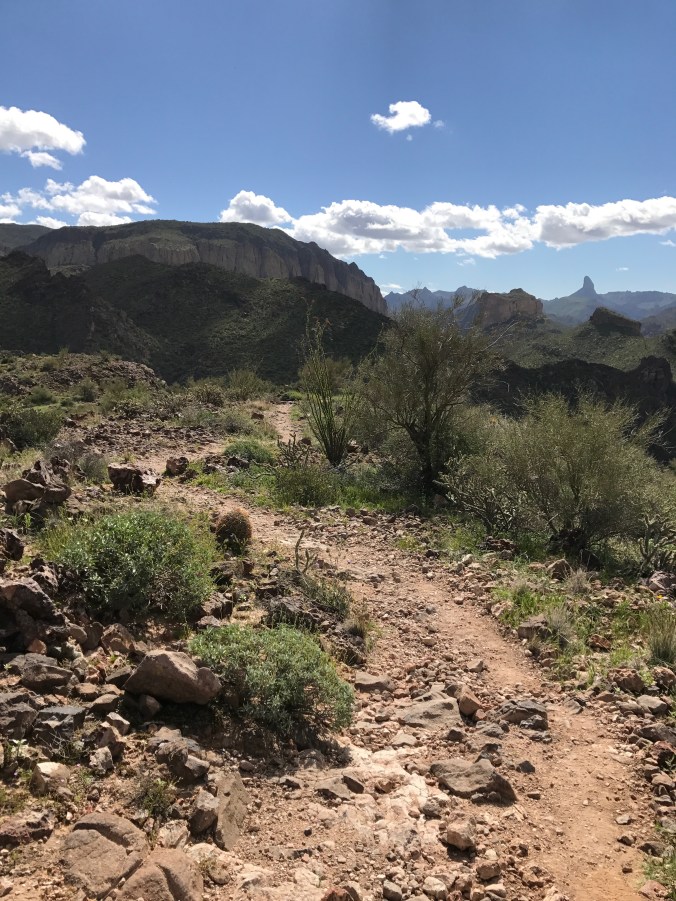
The choices for hiking in Arizona are abundant. We have the Tonto National Forest and Superstition Wilderness literally at our backdoor. The Tonto National Forest embraces almost 3 million acres of rugged and spectacularly beautiful country, ranging from Saguaro cactus-studded desert to pine-forested mountains beneath the Mogollon Rim. This variety in vegetation and range in altitude (from 1,300 to 7,900 feet) offers outstanding recreational opportunities throughout the year, whether it’s lake beaches or a cool pine forest.

266A4C4C-03EB-4589-959B-CEF0170CB2D0A685102E-C0B4-45B7-B979-ECEB8CF6608A

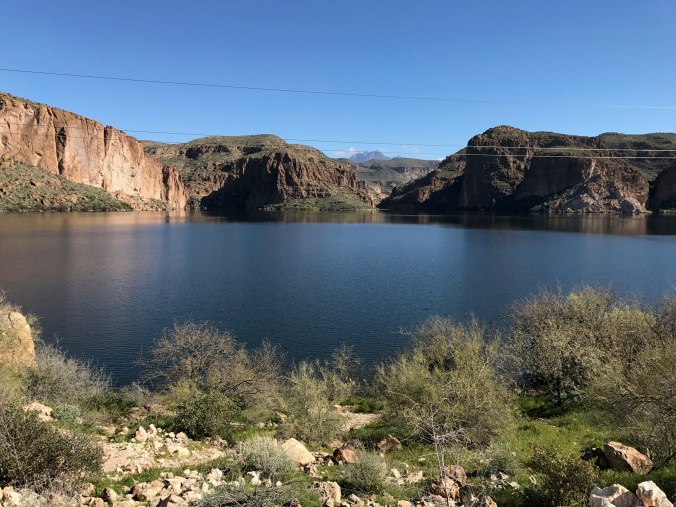
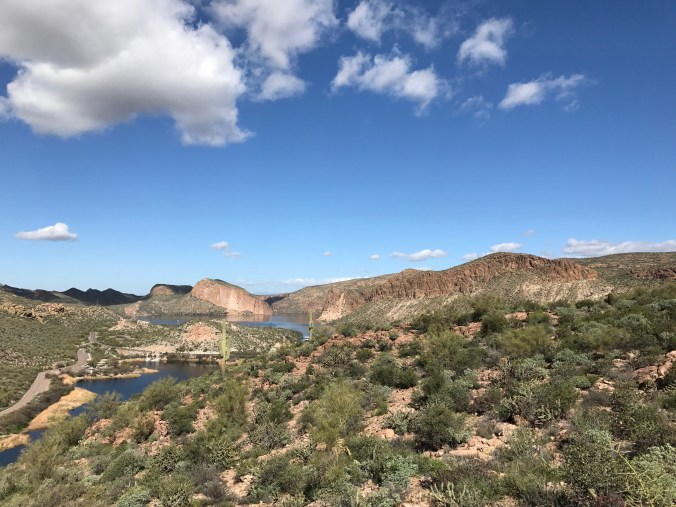
The unusual amount of rainfall this year in Arizona has provided a stunning backdrop for hiking with lush green hills and wildflowers just starting to bloom. Our hike yesterday up into Boulder Canyon had the added bonus of lake and stream views. The Boulder Canyon Trail climbs steeply to the wilderness boundary with expansive views over Canyon Lake. My activity app reported 68 floor, 15,318 steps and 6.4 miles at the end of the day – a well deserved Corona with a lime was earned!

59EF7590-26AF-482F-A9A6-0193EFD90182.JPG

A8B5B9E3-E941-4F30-B8DC-4BA1D39D307C

I love this hike for its rugged beauty. Bonus points for the reward of lunch with a view overlooking La Barge Creek with Weavers Needle and Ship Rock looming majestically in the distance. What a great place to sit quietly soaking in the beauty of nature and watch hawks floating gracefully through the canyon.

F5317BF3-C640-4222-8364-98E2456B84FA

2E1F7253-15BF-4649-A66A-AE2E0AA26A6B81F958A9-5275-465B-B6E5-34E7D2D5180A

Cooking in a tiny kitchen

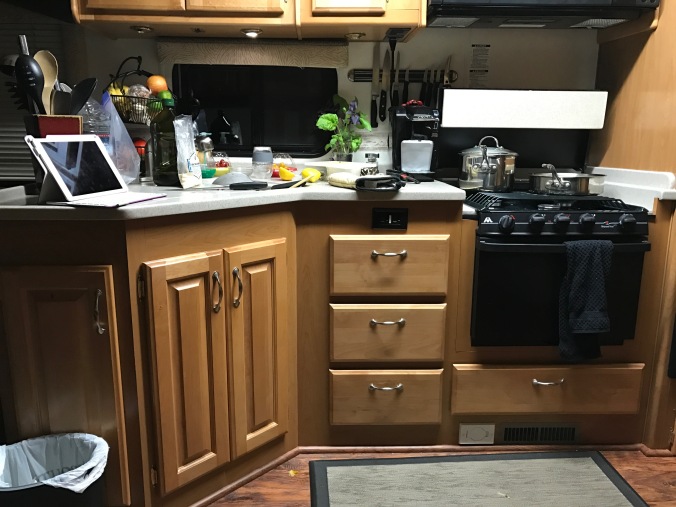
Having gone from cooking in a home with copious amounts of counter space to an RV with a tiny kitchen hasn’t dampened my enthusiasm for cooking. I have learned a few tricks along the way from cooking in our small boat galley which have helped me make the transition to life on the Road House.

d43e06c0-eccf-4851-8f3f-6464af8f0206

I really did have to pare down the gadgets, dishes and cookware when we moved onto the Road House but so far I don’t feel like I am really missing anything. I keep my essentials in the precious storage space in the kitchen. To get this anointed space, they must be things I use daily or at least often. It is still a challenge in that when I want one thing, it seems I have to move six things to get it but c’est la vie…I have time right??? The one thing I did shed was my crockpot but to be fair it was replaced with an Instant Pot…which I LOVE and use often. The non-essentials like my paella pan, fondue pot, etc are in a plastic crate in the basement storage compartment in the RV, along with a few things we should have never brought along (that’s another story), Wally’s tools, extra dog food, cases of wine, etc.

From a quick cleanup idea to how to get more temporary prep space, here are my top 10 tricks to stay sane in my tiny kitchen.

1. Clean as you go:
When you cook in a tiny kitchen, it doesn’t take much for it to become really messy, really fast. Cleaning as you go is crucial, The last thing I want to see is a big ole mess when I am done eating my fabulous meal and enjoying a great glass of wine.

2. Built-in oven/stove/sink covers that double the counter space:
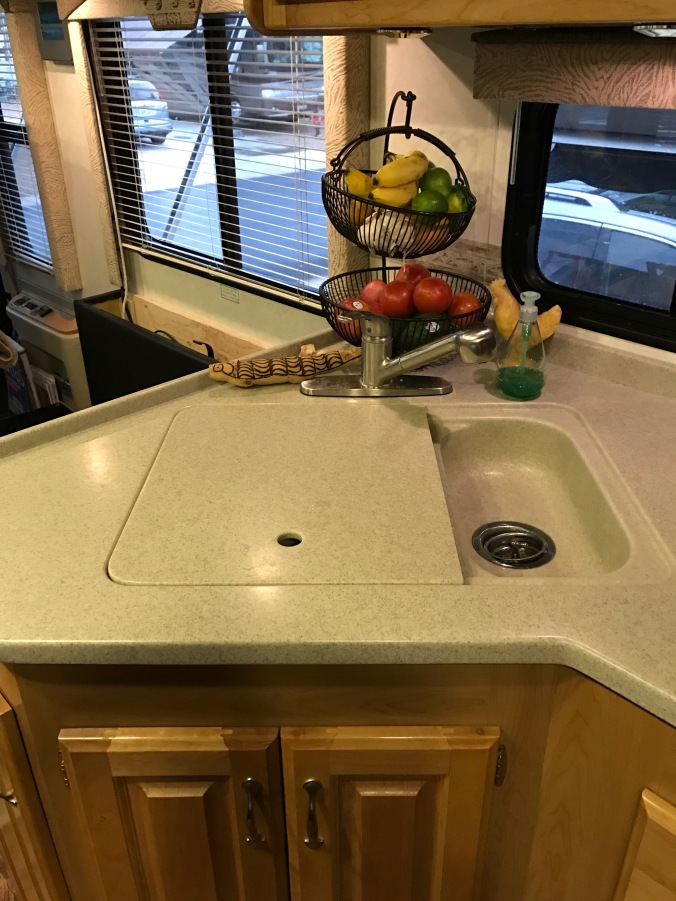
I get more prep space with the stove and sink covers. The sinks have covers so I really utilize that space when I am doing my magic in the kitchen. The stove/oven also has a folding cover which really extends the counter space.

222452cc-f958-4f4d-81f1-c4002dcdd51245f20e7e-ea67-4551-8a57-7e6b28c9912b939665cd-9961-4cc7-aeec-6da3764e7847

3. Peel vegetables over a paper towel for quick cleanup:
When you only have a small bit of space to do all your prep work, it’s helpful if, when you finish one task, you can clear it off quickly for the next. One way to do that is to peel vegetables over a paper towel or mat. When you’re finished, just scoop up the towel (and peels) and throw it in the trash. Instantly clean counter!

4. Use a multi-tier fruit basket:
If I am going to give up precious counter space it is for something that I use often so its great when it actually provide more space. I needed a fruit basket and the Mikasa Spindle 2-Tier Adjustable Basket was just the ticket. It fits perfectly in a hard to utilize space behind my angled sink. By going vertical, I expanded my space, the baskets can be used separately and it stows easily when we are underway as it is three separate pieces.

img_0644

5. Rinse and reuse tools and utensils instead of grabbing new ones:
I have reduced the number of measuring cups, cutting boards and cooking utensils I have onboard teh Road hosue. While it may be helpful to have options while you cook, it only makes cleaning up that much harder! Try this instead: Use the same tools throughout the whole cooking session. When it comes to your mixing bowls, tools, and utensils, rinse and reuse what you’ve already got out instead of grabbing for a new clean one (and multiplying your mess).

6. Harness the power of the multi-tasking gadget:
If there’s one thing every small kitchen needs, it’s an immersion blender. This amazing multi-tasking tool can often replace a number of larger, clunkier appliances, and because it’s so easy to clean and reuse, it’s an amazing thing to have around when you’re cooking in a tiny space. My beloved Instant Pot is another multi-use gadget, pressure cooker, slow cooker, rice cooker, sauté pan…the list goes on!

img_0664

7. Use every available space:
The Road House is definitely lacking in pantry space so my microwave and oven double as storage. Not always convenient when you want to use them but where else would I store the baking pans, placemats and all my cutting boards? Funny, but I use all those things more than I use the oven. Same goes for the microwave oven – it is the perfect place to store open bags of cracker, chips or a loaf of bread. We have a Traeger which we use almost every night – it even makes a great pizza oven.

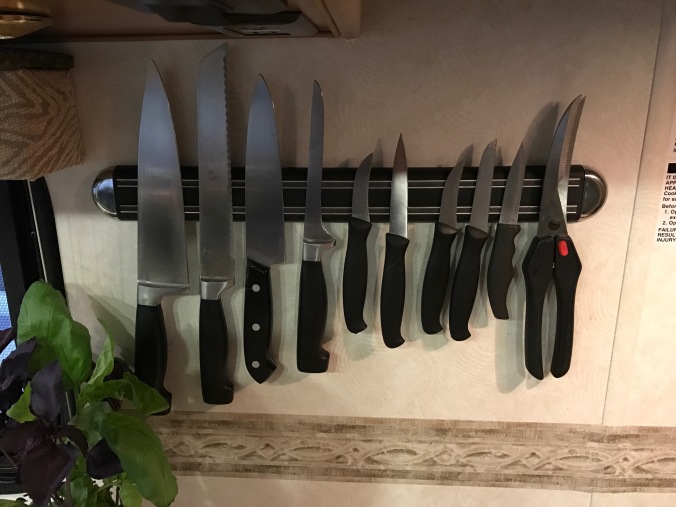
8. Use a magnetic knife strip:
I love a good, sharp knife and 11 of them made the cut (ha-ha) and are on the RV. The magnetic knife strip freed up so much precious drawer space. I admit I was a bit nervous about how well the knifes would ride while we are underway but so far so good. No one has been attached by a rogue knife…yet!

201F4469-1A3F-49F0-A16D-080BB73A995F.JPG

9. Nesting and stacking is essential:
It’s super frustrating when you’re cooking in a small kitchen to feel like you’re always dealing with cramped cabinets, and annoying to have to rummage for a pan at the last minute. Well, that’s life on an RV or a Boat but I do reduce my frustration by nesting and stacking. Often used items get front row space, while the other essential but less used items as in the back of the cupboards. The drawers in the Roadhouse kitchen are really deep, so I utilize stackable drawer organizers which allows me to have all my favorite gadgets. Again, essentials get top drawer space. The I can’t live without you,  but don’t use you very often gadgets are in the bottom trays. It is fun to rediscover a favorite gizmo occasionally!

10. Make a shopping list/meal plan:
I know that seems basic but with my limited space, I have to minimize impulse purchases because there is simply no unused space in the interior cabinets. I don’t keep quite as extensive a pantry as I did in the house. I have all the essentials but try to use dry goods like rice, dry beans or grains quicker. For example, instead of buying canned black beans, I whip up a batch in the Instant Pot and freeze the amount I don’t need at the time. Spices, well that’s another story…hasn’t been much cutting back or consolidating there. I love Penzy’s spices and this gal can always cram another variety in the cupboard.

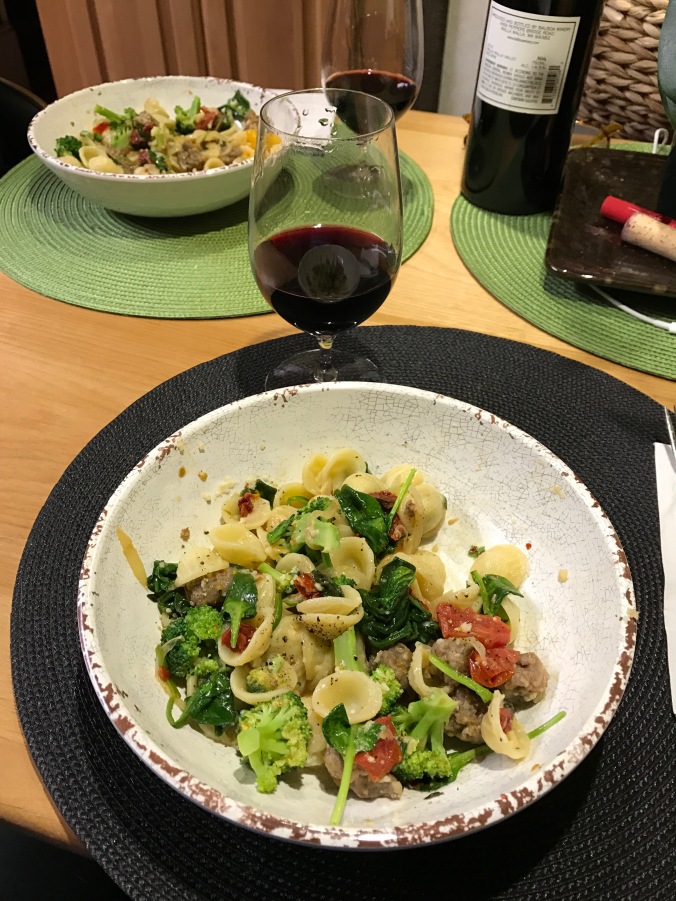
I am sure I will learn some more tricks along the way and find some new recipies I can’t wait to try. Last nights dinner was a tried and true, Orecchiette pasta with Caramelized Garlic, Sausage and Broccoli.

51fe8292-9c48-42fd-8654-e742277a4616

So delicious and I didn’t even total the tiny kitchen too bad!!!

2a7f99f1-9c5f-48ee-815f-2b2dcd32aa62

Get Inspired…Watch the Sunset

I have long enjoyed the magical spell the sunset casts and having recently retired, I finally have time to enjoy the evening magic more often. It doesn’t hurt that we are in the part of the country that actually has clear skies where sunsets can be seen!
We all know just how romantic, inspiring and utterly captivating the sunset can be, but most of us only make time for sunsets when we’re on vacation, as if that calming, beautiful moment can only occur when we’re in an exotic place, free from everyday obligations.
But — newsflash — the sun sets every single day, no matter where you are and you don’t have to be retired to enjoy them. The sunset is an easy, free way to infuse some wonder and awe into your regular routine.
Here’s why you should consider making time to watch the sun set:
1. It can slow down time.

image
Seriously. By witnessing the beauty and awe of the sunset, you can slow down your perception of time. According to 2012 research, participants who felt awe — defined as “the emotion that arises when one encounters something so strikingly vast that it provokes a need to update one’s mental schemas” — felt like they had more time available and were less impatient. “Experiences of awe bring people into the present moment,” researchers wrote in the paper, “which underlies awe’s capacity to adjust time perception, influence decisions, and make life feel more satisfying than it would otherwise.”
Feel like there aren’t enough hours in the day? Amazingly, by taking the time to gaze out into the vast, color-soaked sky, we’re actually empowering ourselves to regain control of the clock.

2. & 3. It doesn’t take long and it forces you outside.

img_0646No matter what you have to get back to after you watch that last sliver disappear below the skyline, taking a few minutes out of your day to experience some of the golden hour will be worth it. Just a 20-minute dose of fresh air promotes a sense of vitality, according to a series of studies published in the Journal of Environmental Psychology. “Nature is fuel for the soul,“ Richard Ryan, Ph.D., lead author of the studies, said in a statement. “Often when we feel depleted we reach for a cup of coffee, but research suggests a better way to get energized is to connect with nature.”

4. It allows you to multitask in a healthy way.

img_0022You can take in the sunset in a variety of ways: while running, walking, biking or simply observing. The mental benefits of the former three are well known — exercise, after all, has been shown to ease symptoms of depression, anxiety and stress — but simply sitting and observing the sunset also gives you a health boost: the opportunity to practice mindfulness. Personally, I like simply sitting with a nice glass of wine!
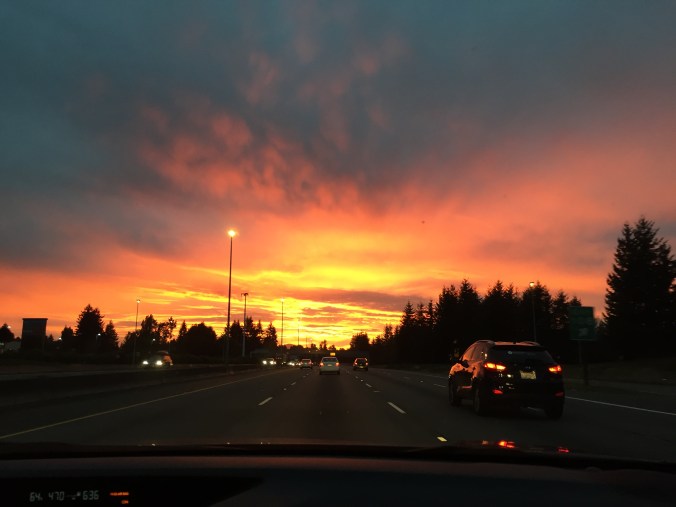
Mindfulness, according to a Perspectives on Psychological Science study, is “the nonjudgmental awareness of experiences in the present moment” and has been proven to have significant psychological and physical benefits, including stress reduction and improved cognitive functioning. What better way to practice being aware of the present moment than by watching the literal passing of time as the sun sinks below the horizon?
5. It will force you to put your phone down.

img_0151When we relegate the experience of sunsets to vacations and special occasions, we feel the urge to document, capture and save them — as if hoarding photos of their majesty will help us remember that wondrous feeling. But if you experience the sunset more regularly, you’ll no longer feel compelled to see it through a screen. By watching the sunset and not your screens, you’ll give your brain the chance to recharge and recover.

6. It will help you appreciate life’s gifts.

img_7360
People around the world are drawn to sunsets, but a few special places have really embraced the sunset as a daily opportunity to give thanks. In places like Santorini, Greece, and Maui, Hawaii, the sunset is regarded as a nightly celebration. Crowds gather to cheer and applaud it, reinforcing the idea that we should celebrate and be thankful for each day.
Being mindful of all the things you have to be thankful for can boost your well-being, research suggests. Studies have shown that practicing gratitude is associated with a sense of overall gladness, improved sleep and even increased patience.

7. It will inspire you.

img_4606
There’s a reason sunsets are timeless and constant standbys of poets, writers and romantics — they’re inspiring.

“It is almost impossible to watch a sunset and not dream”.
Bern Williams

Life on the road with Bentley and Sucia

We love having our pets on the coach with us and for the most part they are traveling fairly well. They are both adjusting to life on the road and while travel days are not their favorite times, we have a routine down now. They definitely sense when we start prepping the coach to hit the road.

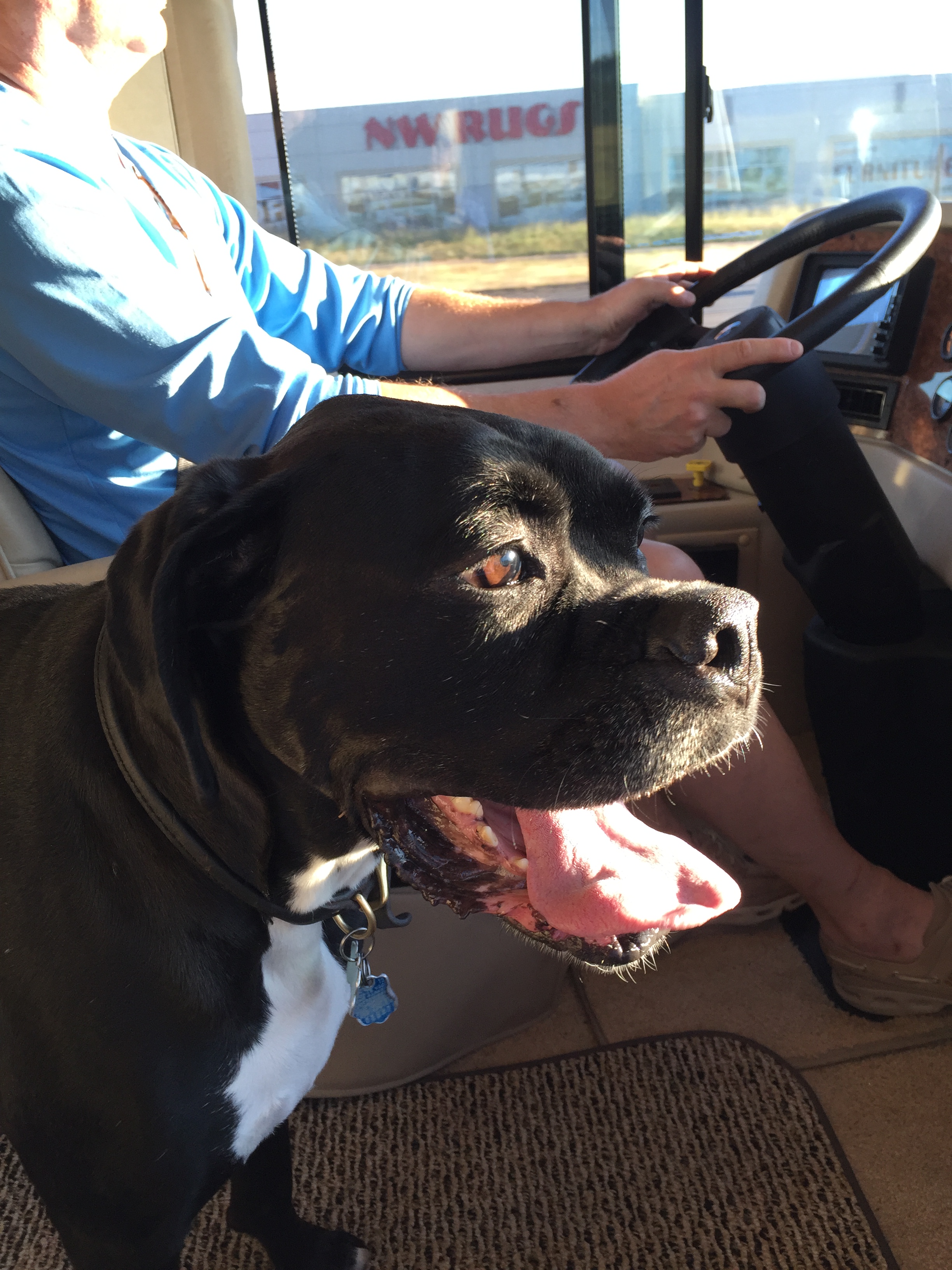
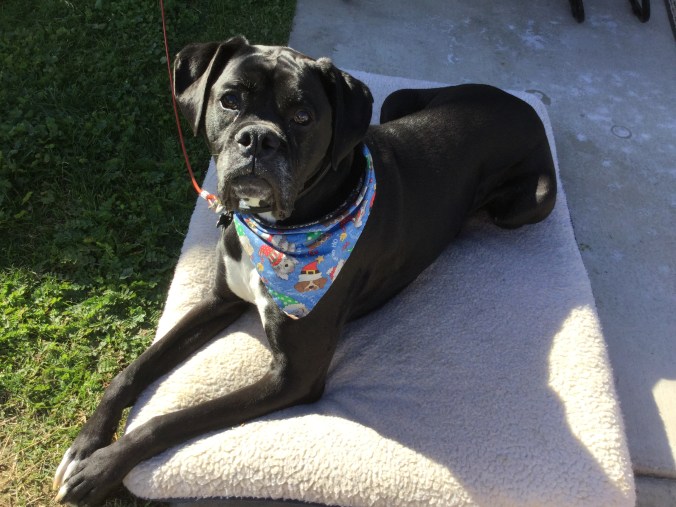
Bentley needs a good walk, a couple of natural stress tabs before we hit the road and he prefers that his bed be right between us while we are under way so he can ride shotgun!

img_0541

Sucia has always been a good traveler in the car and only really cries when she has to go potty. So she is now traveling in style in her large travel crate complete with litter pan and a towel to cover the sides when the coach is on the road. Rescue Remedy in the wet food has really helped settle her anxiety so we always give it to her on travel days.

img_0356

They are both much less jumpy about noises now but Sucia still really hates the process of leveling the coach as the hydraulic levels are pressurized by the onboard air compressor, which can be a bit noisy. Poor Bentley used to shake like a leaf and Sucia just went comatose, poor buddies. We have found that by leaving Sucia in the travel crate until all the arriving chores are done, she is no longer as stressed.

The coach has two slides which open up the bedroom and living area and also operate on a hydraulic system so Sucia has to be safely contained when ever we let them out or put them in as she could easily be crushed if she got behind the bedroom slide, and we all know how tempting it is for kitties to squeezed back under something.

img_7547

With Bentley and Sucia on board the Roadhouse, pet hair and dander are a constant battle. I purchased a really great hepa air cleaner. It is a Winix FresHome with plasma wave which runs 24/7 in the coach. It is really quiet so we don’t even notice it most of the time. What’s really cool about it is that it senses when the air needs more cleaning and will automatically ramp up to scrub the air, then ramp down to the low mode when it is happy with the air quality. The dust in the desert is also a constant so the air cleaner has its work cut out for it. Good news is, it really works and I was impressed (and slight appalled) when I opened up the filter area after a month of constant use. The main filter was full of particulates and yes…cat hair! I vacuumed out the filter and put the unit back to work, easy peasy.

Speaking of vacuuming, that is also a regular occurrence onboard, no surprise. Pet hair, and especially, cat litter that gets tracked around the coach drive me crazy, so I do a quick clean up every morning and a big “clean sweep” once a week. Road House has a built in vacuum system which I love, so life is good!

Before we hit the road, Bentley and Sucia had their favorite places in the house. Sucia has always owned the bedroom and that is no different on the coach. She sleeps the day away, like only a cat can, curled up on the bed, tucked in between a pillow or two. When she is awake, her favorite place to sit is on the passenger club chair where she can look out the window and sniff the fresh air coming in the nearby screen door. Her other place is under the dining table, by her unused kitty sphere. What a waste of money that was, it looks really cool but she has never sat inside the big round basket on the top. She does use the scratching post on the leg of it so now we can’t really get rid of it!!! Seriously, she will sit by it, behind it, but no, of course not inside it. Sucia does not give the groovy sphere a 4 paw rating.

Cool cat sphere huh? Notice that’s not MY CAT…cause she won’t go in there! I am only slightly bitter!!!

img_0584

We haven’t found the perfect place on the coach for the poo palace and are toying with the idea of building it into a spot under the bed. Knowing what happens when the Princess of the Poo Palace has her space messed with, I am reluctant to upset the karma in the kingdom. I am trying to introduce a wood pellet litter as it doesn’t track as bad and is is less dusty than her current clumping litter. That was going remarkably well until I got crazy and switched out the Poo Place for a open air model with a sifting tray. BAD IDEA… Bentley’s bed was the recipient of the Princess’s outrage.

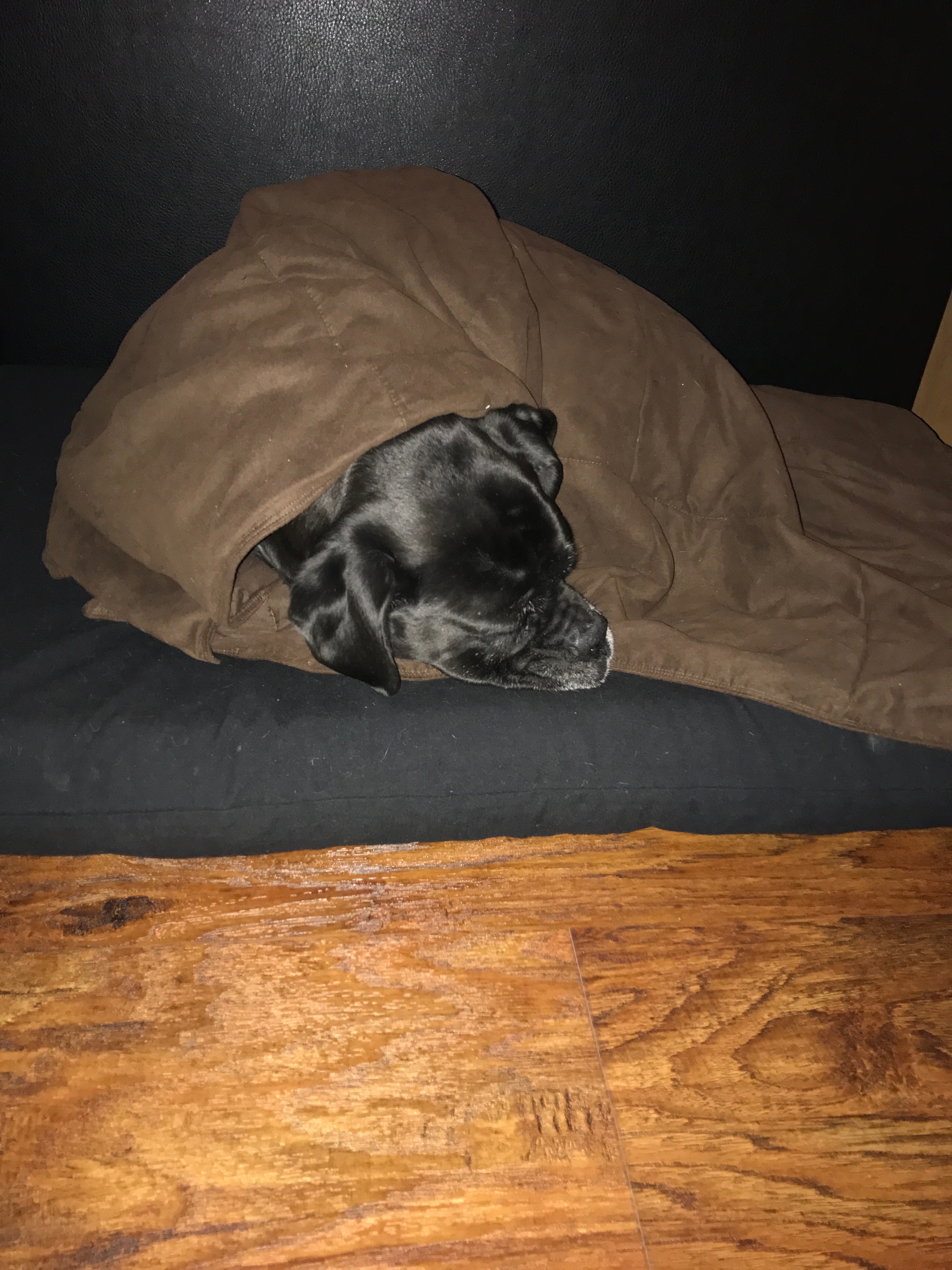
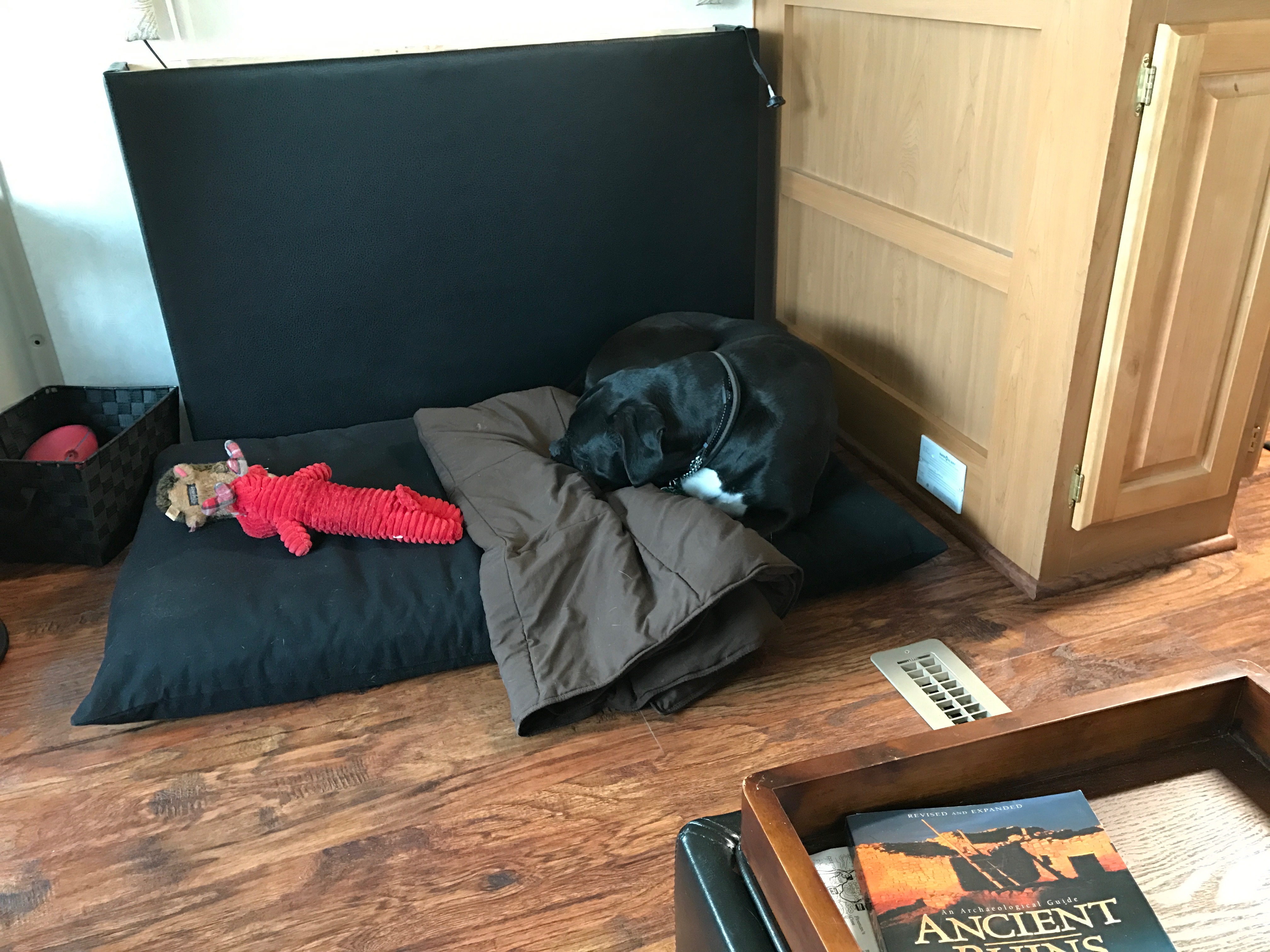
Bentley owns the front of the coach where his big, boy bed resides in front of the big screen TV lift cabinet. We retrofitted that area specifically for his bed and the TV. Luckily, he likes his bed and actually uses it…to sleep on (he was incredibly disgusted with the outrage of the Princess). He would prefer to sneak up on the new leather couch if no one is around to stop him, so we have to use a big piece of foam core to subvert his sneaky attempts. His toy basket was significantly reduced but he does have a small one by his bed. I kept a bag of his favorites and rotate them in and out of the basket but really he still loves nothing better than a game of fetch or a wrestling match with his man.

0904567f-6c02-4fb1-a9cc-53c18f19c4044316a7a1-a9e6-49fd-96e1-578288f50027

For the most part, the two critters coexist nicely and don’t seem to much worse for wear after 2 months of living the mobile lifestyle, Well, sans the litter box incident which I think Bentley has forgiven Sucia for or at least forgotten about.

Cave Creek, AZ

We really enjoyed our stay at Cave Creek Regional Park, so much so I am behind in writing anything about the area. Who’d thunk I would get behind on things after being retired – well, news flash…I am such a slacker!

Like most of the west, Arizona was home to many tribes of Native Americans and Cave Creek is no exception. The Hohokam Native Americans who have been traced back to this area arrived in 700 A.D. They developed extensive irrigation systems, trade routes and generally lived a peacefully existence. These ancient tribes evolved into engineers and craftmen and their history is a fascinating read. Just east of Cave Creek, the Sears-Kay Ruin offers a peek into the lifestyles of ancient Hohokam Indians, ancestors of today’s Pima Indians and the Valley’s first residents.

IMG_0526.JPG

Well, fast forward, there are ruins and remnants of the Hohokam Indians but in general Cave Creek is a outpost of Scottsdale but still has a rural, western feel. We found the area to be charming, with a quiet pace but enough amenities, oh like an amazing, totally local coffee roaster and a killer meat market featuring Arizona grass fed beef and pork. All this but still close enough to Scottsdale to take in a movie and sushi on a rainy day ( yes, it rains in Arizona) or a vistit to the MIM (Musical Instrument Musuem).

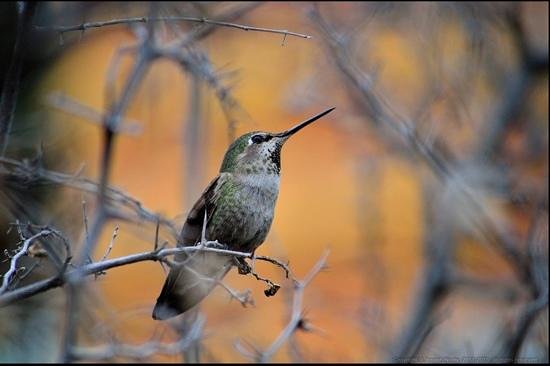
The Cave Creek Regional Park where we stayed was a quiet oasis with lots of wildlife like javelinas, deer, rabbits, quail, doves and a plethora of other birds. I got some action on the hummingbird feeder too, Black Chinned and Anna’s hummers were frequent visitors. We frequently saw the “three amigos”, a local coyote gang, both out hiking and right in the campground.

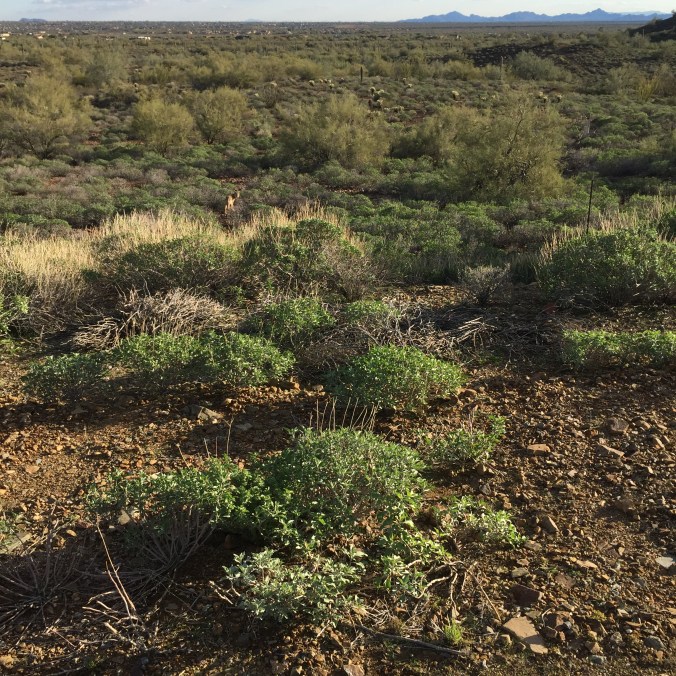
See if you can find the one amigo in this picture:

img_0529

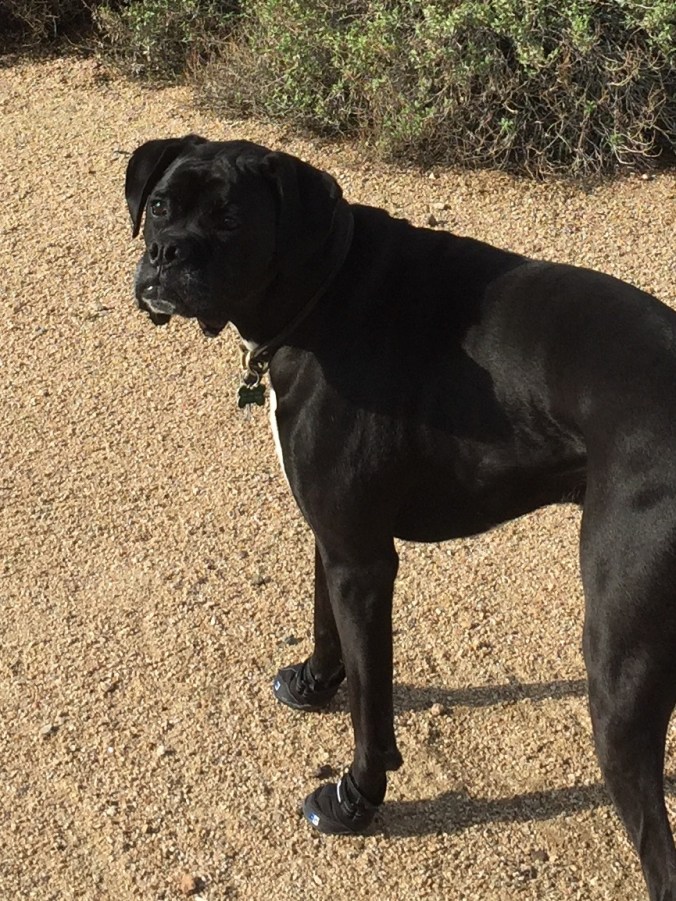
Bentley gave the 2 week stay in Cave Creek a 4 paw rating and the only complaint he had was having to wear the silly hiking boots on the trails. He was content to lay outside all day in the sun, watching the critters and taking the occasional short hike.

While the area hiking was way more extensive that Bentley wanted to explore, Wally did get out and explore the numerous old mines that dot the hillsides while I kept to my bike. The trails at Cave Creek were too technical for me so I stayed on the side roads and ATV trails.

img_0452

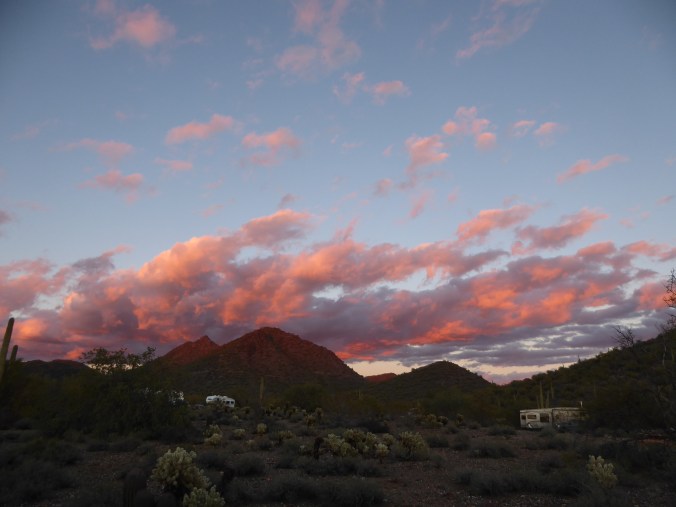
Evening sunsets were spectacular and our southwest facing site was the perfect place to watch the sun dip down on the horizon and fill the skies with a blaze of color. Early mornings, as the sun came up we would see hot air balloons floating lazily over the Sonoran desert.

img_7797

Cave Creek was our second regional park stay and I agree totally with Bentley, it deserves a 4 paw rating!

Wickenburg: A day in the old west

“Hassayampa is temporarily closed due to heavy rain and flooding. If the rain subsides, the preserve will re-open on Wednesday, Jan. 25th.” ARGGGH, foiled again, what is it with me and the Hassayampa River Preserve? I just can’t seem to get through the gate whenever we have been in the area!

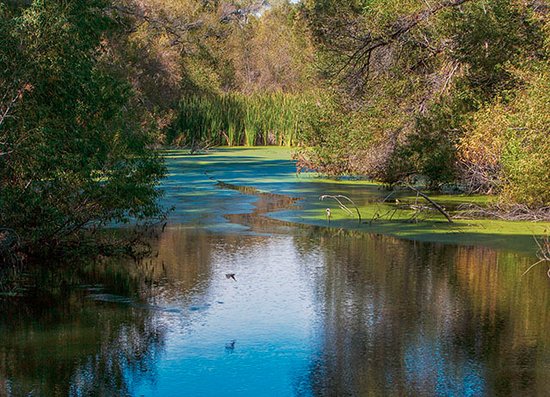
The Hassayampa River Preserve is considered to be an oasis in the desert due to its lush vegetation and flowing water, making a home to a variety of wildlife and approximately 300 different bird species. I was hoping to do a bit of birding and take a short walk. The terrain is vastly different in the preserve, cottonwood trees and lush landscape, thanks to river which creates a thriving watery sanctuary on the edge of the Sonoran Desert. The cottonwood-willow forest is one of the rarest types and most diverse habitats in the Southwest. The name “Hassayampa” comes from a Yavapai Indian word, hayesamo, meaning “following the water as far as it goes.” Apache Indians referred to it as the “upside down river” because it flows underground. The preserve was originally a stagecoach way station in the 1860s.

img_0510img_0511img_0512

The good news is that the recent record rains in the Phoenix area will benefit the desert landscape, the wild flower season should be spectacular but really, rain isn’t why I wanted to winter in the desert! Okay, well enough whining about the rain as it is going to be sunshine again for at least the next 10 days and the Hassayampa will be there to see another day.

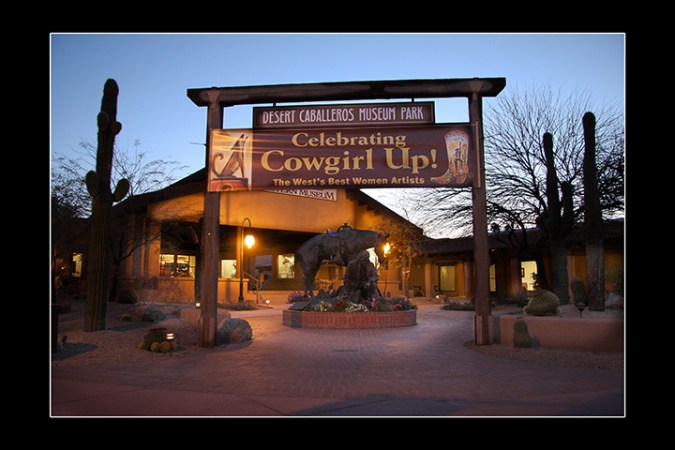
While we didn’t get into the preserve again we did have a great time in the nearby town of Wickenburg. This little town is seeping in history and is home to one the of the best western art and history museums in the state – The Desert Caballeros Western Museum.

In addition the amazing collection of Western art, the museum provides an opportunity to step back in time and see how life was in early Wickenburg. We wandered through scenes that tell the history of the region and the desert frontier. The recreations took us on a stroll along a street of old Wickenburg that re-creates life in Arizona circa 1915, complete with a general store and saloon. Turn the corner to visit a turn-of-the-century Victorian home including a parlor, dining room, kitchen, bedroom and laundry.

Despite all the recent alternative facts about the declining state of America and promises to make America great again, I can honestly say given the trials and tribulations our ancestors went through, life is pretty damn easy.

I really end enjoyed the Ride Through History: Saddles that Shaped the West exhibit.Created by master saddlemaker Carson Thomas, the 23 half-scale saddles at the core of this exhibition tell the story of the American West. The detailed saddles are augmented by historic and contemporary American Indian textiles from the collection of Steve Getzwiller, as well as other artifacts and artwork. Having owned numerous saddles in my “horsey” days, it was great fun to see these amazing reporductions in half size. I could imagine sitting in them, feeling the swaying rhythm of the horse while meandering through the hillsides dotted with saguaro cactus.

img_0514

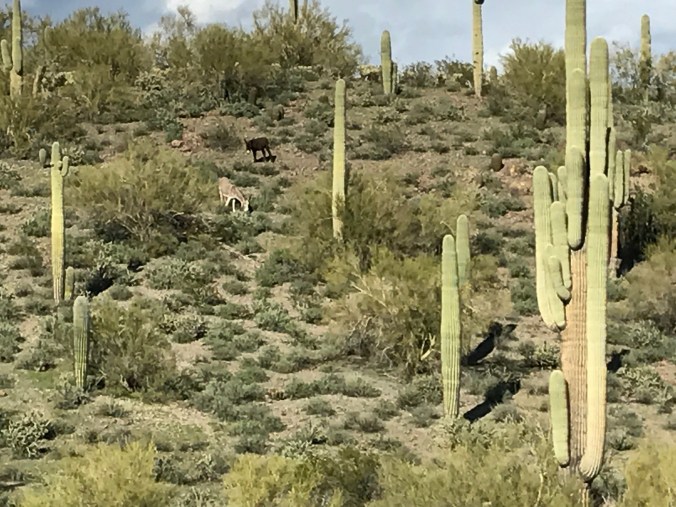
The drive back took us through some beautiful country and the highlight was seeing these wild burros near Lake Pleasant. The BLM manages these wild herds and they looked very healthy and content. There were at least 25 in the group we saw and it must have been “clean up” day as many of them were grooming each other. I suspect they appreciate the rain more than me as there is plenty of green scrub for them to munch on!

b78d83a9-bab5-4e2e-b07e-e00c86ffdb092b0e4d37-4670-4092-a8e3-199e4001494c

Exploring the ghost town of Jerome

I love ghosts towns, there is something spooky and unearthly about them. Where I grew up in rural east Multnomah County Oregon, there was a old house in the woods with some abandon furniture and a piano. It was a great place to explore and get scared so we never went there after dark. I swear sometimes you could hear piano music when the wind blew through the trees. Maybe this is why I love exploring old ghost towns so much?

img_0501

The drive to Jerome took us into the edge of the Coconino National Forest. If you like spectacular scenery and narrow windy roads with sheer drops this is the drive for you. Not sure Bentley enjoyed that part of teh drive as much as we did. So glad we were in Ernie as there is no way we could have driven the Roadhouse into Jerome.

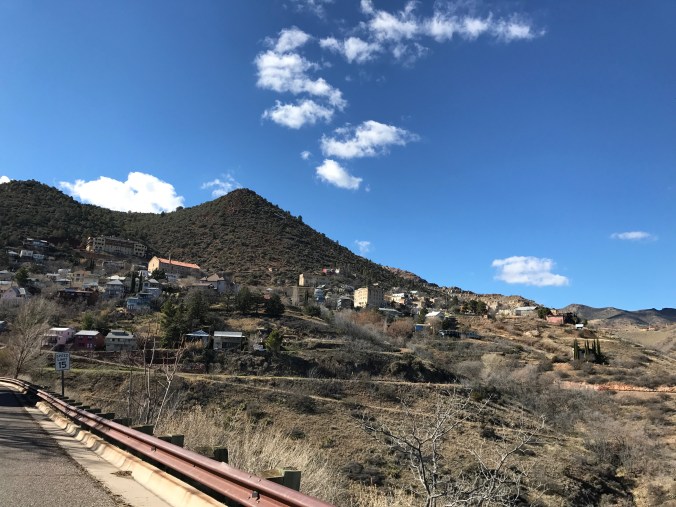
Jerome is a ghost town alive and well with a past described as wickedly wild to wildly artistic. During its rough and tumble days, Jerome was given the distinction of “Wickedest Town in the West”. Saloons and brothels lined the streets, providing the miners with entertainment after a hard days work.


Founded in 1876, Jerome was the fourth largest town in the Arizona Territory with a rowdy population that reached over 15,000. The mines produced over a billion dollars worth of gold, copper, silver and zinc during a period of over 70 years until the last mine closed in 1953.
When gold and copper deposits dwindled, Jerome AZ became a veritable ghost town with about 50 residents that stayed behind. Story is that in the 60’s and 70’s the “Hippies” came into town and today it is comprised of artists, writers, unique boutique shops, wine bars, quaint dining spots and amazing views across the Verde Valley.

bbd8c874-a6d2-4ae2-b6f7-80e808378a7c

Jerome’s appearance has not changed much in the last 100 years. Many of the old buildings from the late 1890s still stand and are occupied by proprietors while many structures are fragment relics from its very early days. Because Jerome was built on the side of a hill, gravity and erosion has caused building to slide down the 30 degree slope. Fires were commonplace, ravaging the clapboard town and landslides destroyed whole sections but Jerome was always rebuilt. At the mercy of the ups and downs of copper prices, labor unrest, depressions and wars, this place has quite a checkered past.

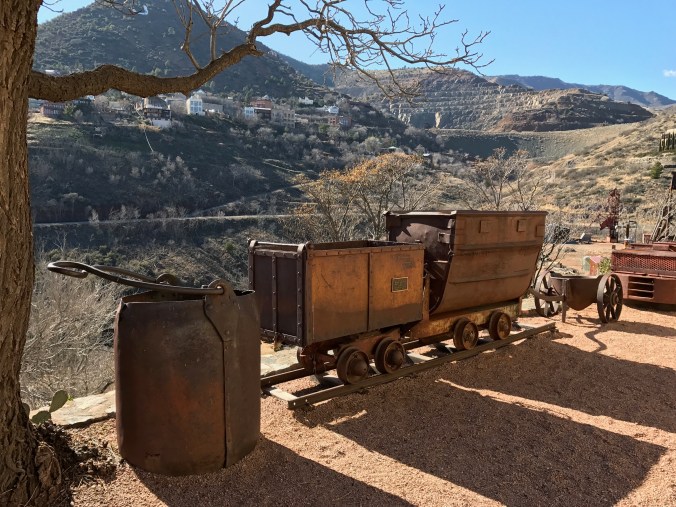
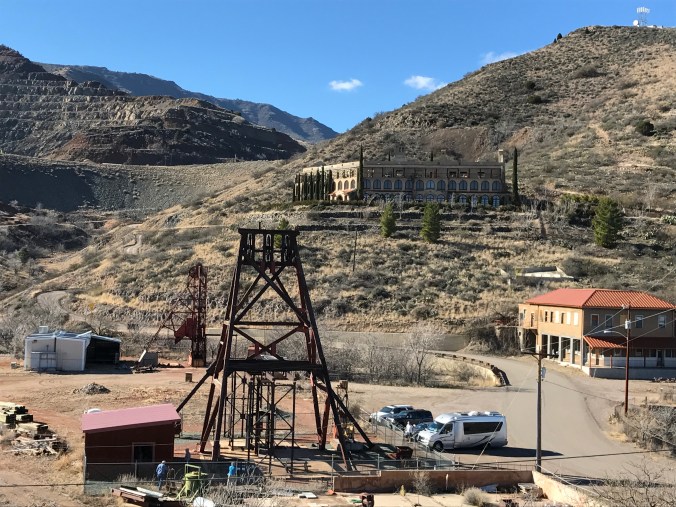
We enjoy walking among the buildings of historical significance, tasting some marginal AZ wine and having a great lunch-breakfast at the Miner’s Café. The views are stunning and the Jerome State Historical Park is well worth a visit. The Douglas Mansion, which was the home of one of Jerome’s most influential aka wealthy, mine owners is now a museum dedicated to the the area’s history. Outside there is old mining equipment, vehicles and buggies. Inside, the mansion is open to tour and you will find some great mineral displays, artifacts and much of the original furniture including a piano – yay! The 30 minute historical film was a hoot as it is narrated by a ghost, which was the only one I saw that day!

3b384aec-79ce-436a-b91e-99c8dfafefd41ed60202-6298-4081-b4b9-20d3459a4ab59375bae4-1328-4c6a-84ff-5002a5b0a4af


Bentley’s four paw perspective

Life on the road is very different for Bentley and I think it truly agrees with him. For many of you that know Bentley, you know him as a sweet but big ole scaredy cat. I call him our reluctant guard dog…he feels obligated to tell me when something is not right with the world but there is no way he feels obligated to do anything about it.

Well, he hasn’t miraculously stopped looking at the word through wary eyes but he certainly is adjusting well to life on the road. Not having a backyard, he grew up as a very indoor dog, going outside with his people to go for walks, to go potty, to go for a car ride, to go to work, to go to his beloved Lexi-Dog but never really spent any measurable time outside just being a dog.

Since we have been on the road, Bentley has been spending more time outside…yes, on his own. He is mostly on a tether by the RV lying in the sun, watching the world go by. He loves watching the birds which are abundant, the occasional cottontail or jackrabbit and the zippy ground squirrels. He is so happy that he gets indignant when asked to come inside. I have tried to explain to him that I can’t just leave him out there when I am off riding my bike and there is no way Mr. Lazy Pants would consider going with me on a 9 mile bike ride. I mean really!! A short hike, a leisurely walk or a serious game of fetch with his favorite Kong ball is worth his consideration.

Being outside in the desert means foot protection and seriously regular flea/tick treatments…these are things we didn’t have to really worry about before. Mr. Bentley is sporting some new hiking boots which he is not really in love with yet, another reason to boycott hiking with his man! This week he is wearing the front boots only and it is comical to see him high stepping down the road. He isn’t quite convinced that the cholla burrs are as bad as the boots and his new technique to shorten his hikes is to fake a poop, spin around to face the other way so he can head back down the trail. Sorry dude, Wally is on to you!!!

img_0454

At the end of the day, Bentley can put a sleep on when I do finally lure him in at dark or after the camp fire hour but he is ready the next morning to head right back out to his plush bed in the sun. Oh, the life of a RV dog!

img_0432